
Electrical Panel Warm or Buzzing? When It’s Dangerous
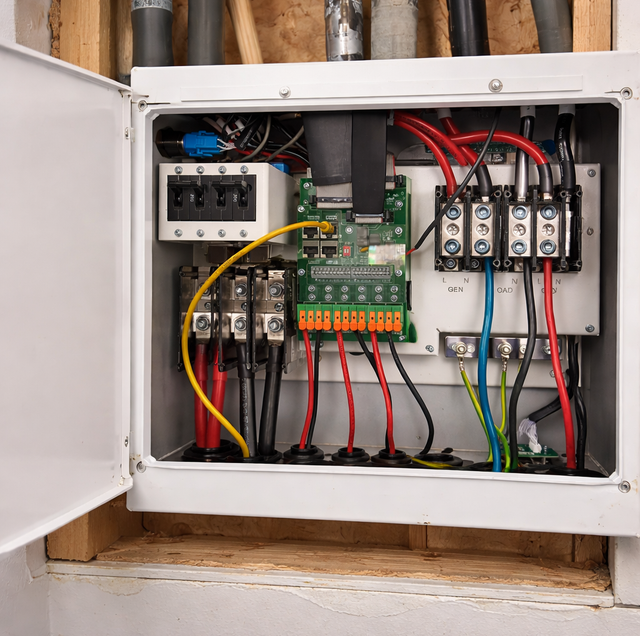
Stand close to your electrical panel in a quiet house and press a hand flat against the cover. A lot of panels give back a faint, steady hum you can feel more than hear, and most of the time that is nothing. The trouble starts when the sound changes character or the metal turns warm. A buzz that rises and falls, a crackle or sizzle, a sharp burnt smell, or a cover that is hot rather than cool are a different message entirely. They mean current is meeting resistance somewhere it should not, and inside a panel that resistance has only two ways to show itself: heat and noise.
Learning to tell the harmless hum from the warning buzz is worth a few minutes, because the two feel similar at the door and could not be further apart in what they mean. One is the physics of alternating current doing its job. The other is a connection quietly cooking toward a fault.
The Hum That's Normal, and the Sound That Isn't
Household power alternates 60 times a second, and that constant reversal makes magnetic parts vibrate at a low pitch. Any panel that contains a coil or a stack of laminated steel, and many components do, can pass that gentle 60-cycle buzz into the enclosure. It is the same physics that makes a plug-in doorbell transformer or a dimmer hum softly. Steady, even, unchanged month to month, and cool to the touch: that is the sound of the system working, not failing.
The danger sounds are different in three ways you can learn to hear. They are usually louder and rougher, a frying or crackling rather than a smooth tone. They tend to come and go with load, swelling when the dryer or an EV charger kicks on and easing when it stops. And they travel with other symptoms: warmth in the cover, a faint acrid or fishy smell, or a breaker you can feel is hot. A smooth hum that never changes is background noise. A buzz that crackles, pulses with the load, or arrives alongside heat is a connection arcing, and arcing is what starts fires.
Why Resistance Turns Into Heat
Everything a warm or noisy panel is telling you comes back to one rule. Current wants a clean, low-resistance path through tight metal-to-metal contact. Where a connection is loose, corroded, or worn, the electricity has to force its way across a poor joint, and that lost energy comes off as heat right at the weak point. The hotter the joint runs, the more the metal expands, relaxes, and oxidizes, which raises the resistance further and drives the heat higher still. Left alone, the process runs one direction only, toward a charred lug or a melted breaker.
That is why a lug torqued to spec stays cool and a loose one bakes. The vulnerable joints in a panel are few: the main lugs where the heavy service conductors land, the bus stabs where each breaker clips on, the screws on the neutral and ground bars, and the terminal where each breaker clamps its branch wire. Any one can go from snug to smoldering, and each announces itself the same way, with warmth and a buzz.
A Loose Lug or Breaker Connection
This is the most common serious cause and the one behind most true panel buzzing. A lug or terminal screw that was never torqued to the manufacturer's spec, or that has worked loose over years of the wire heating and cooling under load, no longer clamps the conductor tightly. Current still crosses the gap, but now it does so across a tiny, high-resistance contact that heats fast and can start to arc, jumping the microscopic gap dozens of times a second. That rapid arcing is the buzz or sizzle you hear, and it lays down heat, scorch marks, and a distinct burnt smell as it chars the surrounding plastic and copper.
The tells cluster together. A specific breaker or the main feels hot when its neighbors are cool. The buzz gets louder as you draw more current on that circuit. You spot browning, a black smudge, or melted insulation at a lug when the cover comes off. Aluminum service and feeder conductors, common on the larger circuits, deserve extra suspicion here because aluminum creeps under pressure and loosens on its own timeline. This is not a wait-and-see condition. An arcing connection is already failing.
An Overloaded Main or Bus
Sometimes the connections are sound, and the panel is simply passing more current than it comfortably can for long stretches. When the total household draw runs near the service rating hour after hour, the main breaker, the bus, and the feeder lugs warm up together, and a broad, load-following hum rises with them. Unlike a single hot lug, this warmth is spread across the main and the bus rather than pinpointed at one joint.
A home that has added a heat pump, a Level 2 EV charger, and an electric range to a service sized for a lighter era is the classic setup for this. The fix is not fresh torque on one screw; it is a real look at whether the service still has headroom, using a proper load calculation rather than a guess. Warmth from overload and warmth from a loose lug can feel similar at the cover, which is one more reason the diagnosis belongs to someone who can measure both.
A Breaker That Isn't Seated on the Bus
Each breaker grips the panel's bus bar with a spring clip that has to bite down on the bus stab with real pressure. When a breaker is not fully snapped in, when its clip has lost tension from age or from being pulled and reinstalled too many times, or when the bus stab itself is pitted, the contact between breaker and bus goes high-resistance. Now the whole circuit's current is squeezing through a poor connection at the back of the breaker, and it buzzes and heats exactly like a loose lug does.
A breaker that runs hotter than its neighbors under the same load, buzzes at its base, or feels loose when you nudge it is a candidate. Certain older panel lines are notorious for this, either because their bus corrodes and loses grip or because their breakers fail to trip reliably once the connection degrades. Resetting such a breaker fixes nothing; it usually needs the panel de-energized, the breaker and bus inspected, and often the breaker replaced.
Aluminum Bus Oxidation
Some panels, especially certain budget lines from past decades, were built with aluminum bus bars instead of copper. Aluminum conducts well but grows a thin, hard oxide skin wherever it is exposed, and that oxide is a poor conductor. Over years, the interface where a breaker clips onto an aluminum stab can oxidize and pit, raising resistance at every one of those contacts. The result is a panel that runs warm and hums even when no single lug is obviously loose, because the trouble is distributed across the bus itself.
You cannot fix an oxidized aluminum bus by tightening anything, and cleaning it is a stopgap at best because the oxide reforms. A panel with a corroded or overheating bus is generally at the end of its service life, and the honest remedy is replacement rather than repair. Here the warm, buzzing panel is telling you the box, not just a connection, has aged out.
A panel that is hot to the touch, buzzing or crackling in a way that follows the load, smells burnt or fishy, or shows scorch marks or melted plastic has an active fault. Do not keep using it, and do not open a live panel to poke around. If you can safely reach the main breaker, switch it off, then call a licensed electrician before restoring power. Arcing at a loose or failing connection is how electrical fires begin.
What a Technician Actually Checks
A good electrician does not guess at a warm or noisy panel; a fault this specific leaves evidence a trained tech can read. The visit usually runs through a set sequence.
A thermal scan under load: with the cover off and the household drawing a known load, an infrared camera or spot thermometer shows exactly which joint is running hot, whether it is the main lug, a bus stab, a neutral screw, or a single breaker terminal. Heat pinpoints the fault far faster than a visual check alone.
A torque and connection check: every accessible lug and terminal is inspected for discoloration and re-torqued to the manufacturer's specification with a calibrated torque tool, not by feel. Under-torqued and over-torqued connections both fail, so the printed spec on the panel label is the target, and a joint that was already scorched is remade, or its conductor trimmed back to clean metal.
Breaker seating and bus inspection: each breaker is checked for a firm grip on the bus, and the bus stabs are examined for pitting, corrosion, or burn marks. A breaker with a weak clip or a damaged stab is replaced, and a bus that is oxidized or heat-damaged indicates the panel itself needs to be evaluated for replacement.
Load and equipment context: if nothing is loose but the whole service runs warm, the electrician runs a load calculation to see whether demand has outgrown the service, and flags panel brands with a known record of bus or breaker failure regardless of what the scan shows that day.
Putting the Clues Together
A warm or humming panel sits on a short list. A smooth, cool, unchanging hum is usually just alternating current vibrating magnetic parts, and it can be left alone. Warmth, a load-following buzz, a crackle, or a burnt smell is the opposite: a loose lug or breaker terminal arcing, a breaker not seated on the bus, an oxidized aluminum bus, or a service running near its ceiling. What they share is resistance where there should be none, and heat and noise are how it announces itself. When a panel is hot or crackling, the safe move is to cut the main and have it read properly rather than live with a noise that is quietly getting worse.
Frequently Asked Questions
No. Removing the dead front exposes the main lugs and bus, which stay energized even with every breaker switched off, sitting at full service voltage with no finger protection. A loose lug you are hunting for is exactly the live, arcing hazard that makes opening the box dangerous. You can safely feel the closed cover for heat, listen at the door, and note whether a smell or a specific hot breaker stands out, then switch off the main if it is reachable. Reading the interior is for a technician with insulated tools and the training to work near a live service.
It often does neither at first, which is what makes it dangerous. A loose, arcing lug can char well past the point of hazard without ever drawing enough sudden current to trip the breaker, because a breaker responds to overcurrent, not to a bad connection heating slowly. This is the gap that arc-fault (AFCI) breakers were designed to close on branch circuits, since they sense the electrical signature of arcing rather than waiting for an overload. A standard breaker will sit above a smoldering lug and never move, so the absence of a trip is not reassurance.
Partly. A large motor load like an air conditioner or heat pump pulls a heavy inrush current for a fraction of a second at startup, and that surge can give the panel a brief louder hum that settles once the motor is running. A short swell at startup that immediately calms is usually just the inrush. What is not normal is a buzz that keeps crackling the whole time the unit runs, or a breaker for that circuit that grows hot, which points to a loose terminal or a failing breaker on the motor circuit rather than the surge.
Not always. A loose lug or a single poorly seated breaker is a targeted repair once the hot joint is found and remade correctly. Replacement becomes the honest answer in a few specific cases. Some panel lines carry a known record of bus or breaker trouble: Federal Pacific Stab-Lok, Zinsco, and Challenger are the names electricians flag most, because their breakers can fail to trip or lose grip on the bus as the connection degrades. There is also a parts problem that forces a full swap even when one joint is otherwise repairable. When a panel line has been discontinued, and its replacement breakers are no longer manufactured, a single failed breaker or a scorched stab has no compatible part to drop in, so the whole panel has to be replaced to restore a safe, matched set rather than fixing the one connection in front of you. Make and parts availability decide the scope as much as the single joint does.
Yes, and it matters for panels in garages, on exterior walls, or in unconditioned spaces. Humidity and condensation speed corrosion at lugs, bus stabs, and the neutral and ground bars, and a thin oxide or corrosion layer raises resistance the same way a loose screw does, adding heat and buzz over time. Water intrusion around a service entrance or a rusting enclosure is a red flag that the connections inside are aging faster than they would in a dry interior spot. A panel with rust streaks or moisture staining deserves a look even if the hum still sounds mild.
Sooner than feels obvious, because the failure mode is gradual until it is not. A smooth, cool hum can wait for a routine visit. Warmth in the cover, a load-following buzz, a crackle, or any burnt smell should be looked at within days, not weeks, since an arcing connection only gets worse and generates its own heat. A panel that is hot to the touch, actively crackling, smoking, or smelling strongly of burnt plastic is the point to shut the main and call for emergency service the same day rather than schedule ahead.
If your electrical panel is warm, buzzing, or crackling, have it diagnosed before a loose connection becomes a fire. Safeline Electric serves Vancouver, Camas, Battle Ground, and the surrounding Clark County and Southwest Washington area. Call (360) 505-0663.
