
Outlet Dead but the Breaker Isn’t Tripped? Check These 5
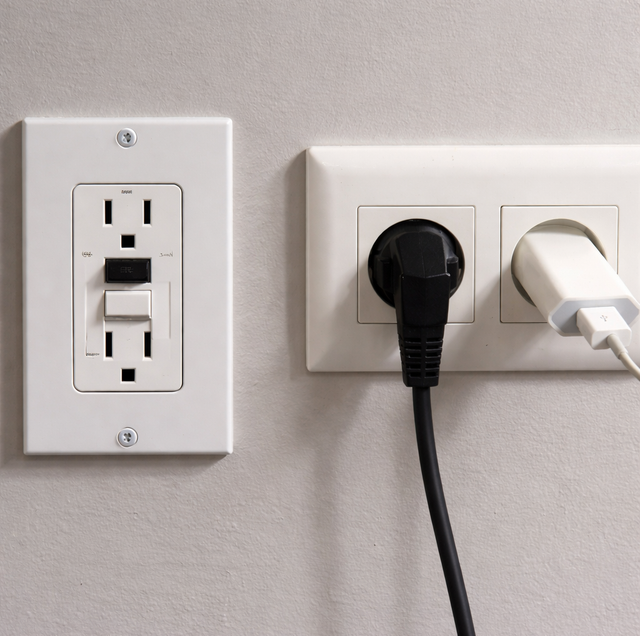
You go to plug in the coffee maker, and nothing happens. The outlet is dead. So you walk to the panel expecting to find a breaker sitting off, ready to flip back, and instead every handle is lined up neat and pointing the same way. Nothing looks tripped. The lights in the room still work; the outlet next to it might still work, but this one receptacle is stone cold with no power at all. That mismatch, a dead outlet and a calm panel, throws people off, because the two facts seem to contradict each other. They do not. A breaker only trips when too much current flows or a fault dumps to ground. A great many things can kill power to a single outlet without ever pulling that much current, so the breaker has no reason to move.
The good news is that the most common causes are also the ones you can check yourself in a few minutes, and only a couple need a licensed electrician. Work through the list below in order. It runs from the fastest, safest checks to the ones that mean the power is dying somewhere inside the wall.
Work Through the Causes in This Order
Start at the top and stop when you find the one that fits. Each step tells you the mechanism, so you understand why it kills the outlet, and whether it is a reset you do yourself or a call you make.
- A tripped GFCI upstream is feeding this outlet: This is the single most common reason a dead outlet leaves the breaker alone, and it catches almost everyone. A GFCI (ground-fault circuit interrupter) has two sets of terminals inside it, marked LINE and LOAD. The LINE side takes power from the panel; the LOAD side passes protected power downstream to other, ordinary outlets. So one GFCI in your bathroom, garage, or on an exterior wall can quietly protect a whole string of plain outlets in other rooms, and when that GFCI trips, every outlet fed off its LOAD side goes dead at once, while the GFCI's own reset button pops out but the panel breaker never budges. The fix is often nothing more than walking the house and pressing the RESET button on every GFCI you can find, including ones in rooms nowhere near the dead outlet. Check bathrooms, the kitchen, the garage, the laundry area, outdoor covered outlets, and even a GFCI hiding behind a stored box in the basement. If a reset button clicks in and stays, the dead outlet often comes right back to life. If it pops straight back out, the GFCI is catching a real fault downstream, and that part is a job for a pro.
- A breaker that tripped only to the middle: Look at the panel again, but this time do not trust the eye test. When a breaker trips, its handle does not always slam fully to OFF. Often it settles into a vague middle position that, in a row of handles, looks close enough to ON that you scan right past it. A breaker sitting mid-trip will not restore power even though it looks live. To reset one correctly, you have to push the handle firmly all the way to OFF first, past the point where it feels done, then bring it back to ON. A half-hearted nudge toward ON does nothing. Run a finger down the row and press each handle outward; the tripped one will have a little more give than its neighbors. Do this before you assume anything worse, because it costs nothing and clears a surprising number of dead outlets.
- A loose backstab or wire nut broke the daisy chain: If the GFCIs and breakers check out, the trouble is likely a failed connection, and this is where a dead outlet turns into a real repair. In most homes, the outlets on a circuit are wired in a chain, one feeding the next, so power flows from the first receptacle to the second, through the second to the third, and so on. Every outlet in that run depends on the connections ahead of it. Two weak points fail most often. The first is a backstab, the push-in hole on the back of a receptacle where a stripped wire is held only by a small spring clip; over years of heating and cooling, that clip loosens its grip until the wire stops making contact, and every outlet downstream goes dark. The second is a wire nut in a box that was never twisted down tight, working loose the same way. When a connection like that opens up, the outlet with the bad joint may still work while everything past it in the chain dies, which is why a dead outlet often points back to a live one earlier in the run. Finding and remaking that connection means opening boxes and testing for power along the circuit, so this one is an electrician's call, not a guess-and-poke job.
- A half-hot outlet a wall switch controls: Before you assume the worst, check whether the outlet is supposed to be switched. In many living rooms and bedrooms, one or both halves of a receptacle are wired to a wall switch so you can turn a lamp on from the doorway. If someone flipped that switch off, the outlet is dead by design, and nothing is broken. Look for a nearby wall switch that does not seem to control any ceiling light and try it. Sometimes only the top or bottom outlet is switched while the other stays live, a setup called a half-hot receptacle, created by snapping off the small brass tab that normally links the two halves so each can be fed separately. If half your outlet works and half does not, a switch is the first suspect, not a failure. It is the easiest fix on this list when it applies, and the easiest to overlook.
- The receptacle itself has failed: Outlets are mechanical as much as electrical. Inside, spring-metal contacts grip the blades of whatever you plug in, and those contacts wear out. After enough plug-and-unplug cycles, or from running a heavy load like a space heater for years, the contacts lose their tension, overheat, and can crack or char to the point that they no longer pass current, even though power is still reaching the box. A receptacle can also fail internally with no outward sign. The tell is that the box has power, but the outlet delivers none: a plugged-in device gets nothing, yet the wiring feeding the device is live. Confirming that takes a tester, and replacing a receptacle means working on the wiring, so once the free checks above come up empty, this is the point to bring in a licensed electrician rather than swap the device yourself.
What the Pattern Tells You
The order you find things in usually points straight at the cause. If several outlets across different rooms all died together, look hard for a tripped GFCI, because one device feeding a long LOAD chain explains a scattered outage better than five outlets failing on the same afternoon. If exactly one outlet is dead and the rest of the circuit is fine, you are more likely looking at a bad connection at that box or a worn-out receptacle. If the dead outlet comes and goes, working one day and not the next, treat that as more urgent than a fully dead one, because an intermittent connection is arcing and heating each time it makes and breaks contact, and that is the kind of loose joint that starts inside a wall.
Damp is worth a mention too. Moisture wicking into an outdoor box or a garage receptacle can trip a GFCI without any obvious weather event, and a corroded connection in an unheated crawlspace can go high-resistance and finally open. Wet-area and exterior circuits stay the weak point in a wet climate year-round, not just in the rainy stretch. None of that changes the order of the checks; it just explains why the exterior and wet-room outlets are the ones most likely to strand you.
If the free steps- resetting GFCIs and cycling breakers- do not bring the outlet back, the power is failing somewhere you cannot see, and that is the line between a homeowner check and an electrician's diagnosis. Opening boxes, testing a circuit for where voltage stops, and remaking connections is where a pro with a tester earns the visit.
Frequently Asked Questions
Yes, and this trips up even careful homeowners. Because a GFCI protects everything wired to its LOAD terminals, a single unit in a bathroom or garage can feed plain outlets in a bedroom, hallway, or on an exterior wall. Builders often chain them this way to protect a whole wet-adjacent run from one device. That is why the fix for a dead outlet is to press the reset on every GFCI in the house, not just the ones nearby. Exterior outlets are frequently fed from a garage or bathroom GFCI, so start there when a patio or porch outlet dies.
They answer different questions. A non-contact voltage tester lights up near a live wire and tells you only whether voltage is present, useful for confirming a box is still energized. A plug-in tester, the kind with three small lights, goes a step further and shows wiring faults such as an open ground, an open neutral, or reversed hot and neutral by which lights glow. For a dead outlet, the plug-in tester tells you nothing because there is no power to read, so a non-contact tester at the box is the more useful tool to confirm whether power is even reaching that point.
To localize the failing joint, plug a lamp into each suspect receptacle in turn and gently wiggle the outlet and the plug while you watch the bulb; the box where a little movement makes the light flicker or die is the one with the bad connection. Which terminal it uses is the key to why it keeps quitting: push-in backstab connections, where the stripped wire is held only by a small spring clip, fail far more often than wires wrapped tight under the side screws, because the clip grips a tiny patch of metal that loses tension every time it heats and cools. The lasting fix is not just retightening the same joint but moving those conductors off the backstabs and onto the side screw terminals, which clamp much more copper and stay tight. Until that is done, stop using an outlet that flickers under a wiggle, because the same motion that dims the lamp is arcing inside the wall.
Not necessarily. Many receptacles are wired half-hot, with one half switched from the wall while the other stays permanently live. Confirm a split-feed before assuming a failure: put a plug-in tester or a lamp on the half that still works, and if that half holds a steady reading no matter how you flip nearby wall switches, it is the always-hot leg and the dead half is simply waiting on its own switch, so cycle every nearby switch and watch the dead half. If no switch revives it and a tester shows power is actually reaching the box, the fault is in the device or the feed to that half. One thing to know before you hope for an easy fix: on a split-feed, the small brass tab between the two hot screws was deliberately snapped off so each half could be fed separately, and a tab that has been broken off cannot be bridged back. A leg that has truly lost power is not restored by the tab, so a half with a real feed failure means a device and wiring diagnosis to trace where that power stops.
A reset that pops right back out means the GFCI is doing its job and catching a fault it will not ignore, usually a real ground fault on something downstream, moisture in a box on that chain, or a damaged appliance cord still plugged in on the LOAD side. Unplug everything fed by that circuit and try once more. If it still refuses to hold with nothing plugged in, the fault is in the wiring, or the GFCI itself has reached the end of its life, and both are diagnosis calls. A GFCI generally lasts around ten years before its sensing electronics weaken.
It can, and it hides better than a standard breaker. Arc-fault (AFCI) and dual-function breakers watch for arcing and ground faults, and when they trip, they can look nearly identical to an untripped handle in the row, so you have to cycle each one fully off and back on to be sure. A shared or multiwire circuit adds another wrinkle: a loose neutral serving two hot legs can leave one set of outlets dead while the breaker sits closed. If your panel has newer breakers with a small test button on each, work them the same way you would a GFCI before assuming the outlet is the problem.
Have a dead outlet that no reset will fix — schedule a diagnosis and repair with a licensed electrician. Safeline Electric serves Vancouver, Camas, Battle Ground, and the surrounding Clark County and Southwest Washington area. Call (360) 505-0663.
