
Whole House vs. Portable Generator: Which Fits Your Home
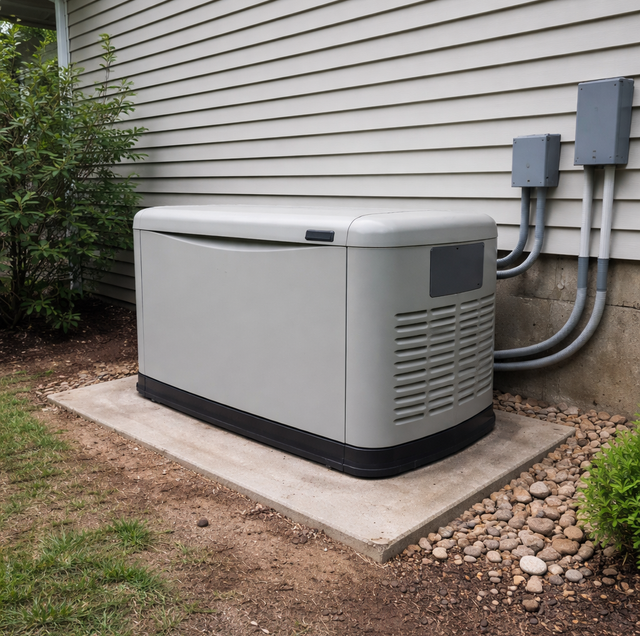
The lights drop, the refrigerator goes quiet, and you stand in the dark doing the mental math you swore you would do after the last outage. Do you want a machine that handles this on its own while you sleep, or one you wheel out, fuel, and start by hand when you need it? That single choice, automatic versus manual, is really the fork between a permanently installed standby generator and a portable one. Everything else, the fuel, the wattage, the wiring, and the upkeep, follows from it. Outages are not a one-season problem. Winter windstorms and ice bring down lines, but summer heat waves, utility switching, and equipment faults take the power out the rest of the year too, so whatever you pick has to earn its keep year-round.
This is a comparison, not a verdict, since what fits your home hinges on what you need kept running and how involved you want to be when the grid quits. Here is how the two options differ, what each one does to your electrical system, and how to match the choice to your house.
The Two Machines, Side by Side
A standby (whole-house) generator is a fixed installation. It sits outside on a pad like a condenser, connects to your electrical system through an automatic transfer switch, and runs off your natural gas line or a propane tank. When it senses the utility drop, it starts and restores power on its own, usually within seconds, then shuts down and resets when the grid returns.
A portable generator is a wheeled, engine-driven unit you store in the garage and bring out when you need it. It runs on gasoline (many models also take propane), puts out a limited block of wattage, and requires you to be there to fuel it, start it, and connect it. The table below lines up the differences that matter.
| Factor | Standby (whole-house) | Portable |
|---|---|---|
| How it starts | Automatic, through a transfer switch, within seconds of an outage | Manual: you pull-start or push-button it and connect it by hand |
| What it powers | Some or all of the house, sized to your loads | A limited set of circuits or a few appliances at a time |
| Fuel | Natural gas (continuous) or propane from a tank | Gasoline, or propane on dual-fuel models; refueled by hand |
| Runtime | As long as fuel flows; unlimited on natural gas | Limited by the tank; needs refueling every several hours |
| Connection | Automatic transfer switch, permanently wired | Interlock or inlet box with a transfer switch, never a backfeed cord |
| Install | Permanent, with gas and electrical work and inspection | Minimal, but a safe hookup still needs a proper transfer means |
| Maintenance | Oil changes, a battery, and a weekly self-test cycle | Fuel stabilizer, periodic test runs, storage care |
| Noise | Enclosed engine that runs a brief weekly exercise | Open-frame engine, generally louder while running |
| Placement | Fixed outdoors, set back from the house | Outdoors only, well away from windows and doors |
What a Standby Unit Actually Does
The defining part of a standby system is not the generator itself but the automatic transfer switch (ATS) it wires into. The transfer switch is the traffic cop between the utility and the generator. It constantly watches the incoming grid voltage, and when the power fails, it disconnects your house from the utility, signals the generator to start, and connects your circuits to the generator instead. When utility power comes back and holds steady, it switches everything back and tells the engine to cool down and stop. Because that switch physically prevents the house from being tied to both sources at once, generator power can never flow back onto the utility lines. That interlock is the safety heart of the system.
Fuel is the other big advantage. A standby unit ties into your natural gas line, so it draws fuel continuously with nothing to refill, or it runs off a propane tank sized for the days you want to cover. There is no wheeling cans of gasoline in the weather. Natural gas service usually stays up when the electric grid is down, since the two systems are separate, though a propane setup gives you an on-site reserve if you would rather not depend on the gas utility at all.
Standby units are rated in kilowatts (kW), and sizing is where the whole-house promise gets honest. Air-cooled residential models commonly land in a range that covers a typical home's essentials and then some, while larger liquid-cooled units power big all-electric houses. You do not automatically need the largest one. Many systems use load management, sometimes called load shedding, where the transfer switch or add-on modules briefly drop lower-priority loads, such as an electric water heater or a second air conditioner, so a right-sized generator can still run everything that matters without being built for the rare moment every load runs at once. An electrician sizes the unit from your actual demand, the same load logic used to size a service, so you get enough capacity without paying to power a peak that never happens.
The Portable Route, and the One Rule That Is Not Optional
A portable generator trades automation for lower commitment. You store it, and when the power goes out you roll it outside, start it, and connect it. Output is measured in watts, and it is finite, so you are choosing which loads to run rather than backing up the whole house. That is fine for keeping the refrigerator cold, the furnace blower turning, a few lights and outlets alive, and phones and a modem charged. It is not going to carry central air, an electric range, and a well pump all at once.
How you connect it is the part people get dangerously wrong. The only safe ways to feed house circuits from a portable are a manual transfer switch or a generator interlock kit paired with a power inlet box mounted on the wall. The interlock is a sliding metal plate on your panel that makes it physically impossible to have the main breaker and the generator breaker on at the same time, which is exactly the protection a standby's transfer switch provides. You plug a properly rated generator cord from the unit into the inlet box, flip the main off, flip the generator breaker on, and power only the circuits you have chosen.
What you must never do is run a double-male cord from the generator into a dryer or dinette outlet to energize the panel. This backfeed cord, sometimes called a suicide cord, is deadly for two reasons. First, it sends power backward onto the utility lines, where it can electrocute a lineworker restoring your service. Second, it bypasses the main breaker and every overcurrent protection between, so nothing stands between the generator and a fault. A transfer switch or interlock exists precisely so this can never happen. If you take one thing from this piece, take that.
Critical Loads, and How Big Is Big Enough
Whichever path you choose, the useful planning question is which circuits you truly need during an outage. Grouping those into a critical-loads subpanel makes both systems simpler. This is a smaller panel, wired off the main and fed through the transfer switch, that holds only the circuits you want backed up: the furnace or heat-pump air handler, the refrigerator and a freezer, a sump or well pump, the internet equipment, and a handful of lights and outlets. During an outage, the generator powers just that subpanel, which is why a modest unit can cover the essentials of a large house. It also keeps the wiring tidy, since everything that matters is grouped in one place.
Sizing then comes down to adding up those loads honestly, and the trap is startup surge. Motors, especially a well pump, a sump pump, an air-conditioning compressor, and a furnace blower, pull far more current for the split second they start than they draw once running. A generator has to cover that surge, not just the steady draw, which is why the running watts on the box are only half the story. A well pump that runs on a couple thousand watts can spike to several times that on startup. This is the single most common reason a portable that looks big enough on paper stalls or trips when the pump kicks on, and it is why a standby unit is sized with those surges built into the calculation.
Matching the Choice to Your House
Start from how you want to live through an outage. If you travel, keep medical equipment running, work from home, have a well and a sump that cannot lapse, or simply do not want to think about the weather, the automatic operation and continuous fuel of a standby system are the reason it exists. It runs whether you are home or not, and it does not care whether the outage lasts an hour or three days.
If outages where you live are short and occasional, you are comfortable running the machine yourself, and you mainly want to save the food in the fridge and keep the house from freezing, a portable paired with an interlock and inlet box covers a lot of ground for far less installed hardware. The compromise is real, though: someone has to be home, awake, and willing to go outside to start and refuel it, and it will not run the whole house.
There is a middle path worth naming. Having an electrician install an inlet box and interlock now, sized to a critical-loads subpanel, gives you a safe, permanent connection point for a portable today and a clear upgrade path to a standby unit later without redoing the panel work. However you go- the wiring side, the transfer switch or interlock, the inlet box, the subpanel, and the load sizing- is what makes a generator safe and actually useful, and it is the part worth getting a licensed electrician to plan rather than improvising in the dark.
Weighing It Up
The choice between whole-house and portable is less about the generators and more about two questions: how automatic you need the response to be, and how much of the house you need running. A standby unit answers "all of it, by itself, on continuous fuel," and it asks for a permanent install and routine upkeep in return. A portable answers "the essentials, when I set it up," and it asks for your presence and a strict, safe connection every time. Neither is wrong. What is wrong is a backfeed cord and a generator sized off running watts alone. Decide which circuits you cannot live without, size for their startup surge, wire it through a real transfer switch, and either machine will do its job when the grid quits.
Frequently Asked Questions
Not in the way a standby does. A portable puts out a fixed block of watts, so you power a chosen set of circuits, not everything at once. The limiting factor is usually startup surge, not steady draw: a central AC compressor and a well pump can each spike to several times their running watts for an instant, and two large motors starting together will stall a mid-size unit. A soft-start device on the air conditioner can shrink that surge and stretch what a portable covers, but you are still managing loads by hand rather than running the house freely.
Usually it keeps running, because the gas network and the electric grid are separate systems and gas service rarely drops during an electrical outage. If you want to be independent of the gas utility entirely, a propane model draws from your own on-site tank instead. One sizing detail catches people: a large standby unit needs enough gas volume and pressure to feed it, so the installer may have to confirm your meter and gas piping can supply the unit's demand, and upsize the meter or line if not.
It starts itself on a schedule, typically once a week, for a short self-test called an exercise cycle that circulates oil, warms the engine, and confirms it will start when needed. Plan on periodic oil and filter changes like any engine, and know that the starting battery is the most common failure point: it sits for months and then has to crank on demand, so a maintained battery and its trickle charger matter as much as the fuel. A unit that never exercised is the one that fails to start in a storm.
No. An open door does not clear the exhaust, and portable engines produce carbon monoxide fast enough to be fatal indoors or in an attached garage even with ventilation. Run it outdoors only, well away from the house, and keep it clear of windows, doors, and vents so exhaust cannot drift back inside, generally around twenty feet, positioned so wind carries fumes away from you. Many newer portables include a CO shutoff sensor that kills the engine if it detects a buildup, which is a useful backstop but not a license to run one in an enclosed space.
The connection side is the part to leave to a licensed electrician, and most jurisdictions require a permit and inspection. There is also a compatibility catch: an interlock kit has to be listed for your specific panel brand and model, and it dictates where the generator breaker can go and how the slide plate mounts, so a generic part often will not fit. A properly installed transfer switch or interlock, an inlet box, and a correctly sized cord are what make the hookup safe, which is the whole reason it is worth doing right rather than rigging something temporary.
Big new loads change the math, so plan the backup around them. A standby system handles this through load management: an EV charger or a second air conditioner can be set as a sheddable load the transfer switch drops during generator operation, letting a right-sized unit cover the essentials without powering the charger mid-outage. With a portable, a new heat pump or charger simply will not be among the circuits you back up. Either way, deciding early which future loads are essential versus optional keeps you from oversizing the generator or rewiring the subpanel twice.
Ready to plan backup power that fits your home? Book an evaluation to size the unit, set up a critical-loads subpanel, and wire a proper transfer switch or interlock. Safeline Electric serves Vancouver, Camas, Battle Ground, and the surrounding Clark County and Southwest Washington area. Call (360) 505-0663.
